


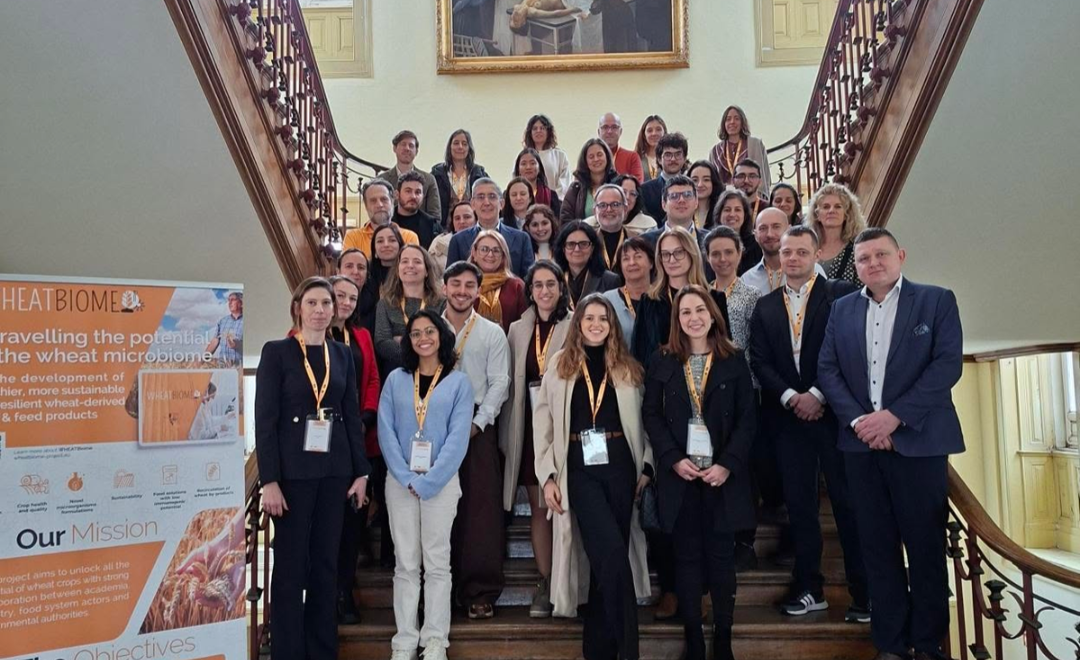
WHEATBIOME is an international research project aimed at expanding knowledge of wheat-associated microbiomes and harnessing their potential to develop innovative and sustainable solutions for crop production, food and feed.
Modern food production systems face numerous challenges, including climate change, a growing global population and the need to ensure food security while reducing the negative environmental impact of agriculture. In this context, harnessing the natural potential of microorganisms inhabiting plants and soil is becoming increasingly important.
As one of the most important crops in Europe, wheat is a key focus of research conducted within the WHEATBIOME project. Microbial communities associated with wheat can contribute to improving soil fertility and promoting soil regeneration, support plant protection against pathogens, and regulate plant metabolic processes, thereby influencing the quality and properties of harvested crops. Their application also creates new opportunities for developing high-value food and feed products.
The project aims to advance knowledge of wheat microbiomes and translate research findings into practical applications through the development of innovative products and solutions that support sustainable agriculture and food production.
Warsaw University of Life Sciences (SGGW) – Project Involvement
As part of the WHEATBIOME project, the Warsaw University of Life Sciences (SGGW) is responsible for Task 5.4, entitled “Implementation and Validation of Novel Fermented Feed Products for Poultry”.
The aim of the research conducted at SGGW is to evaluate the potential use of wheat bran fermented with lactic acid bacteria isolated from wheat ears in poultry nutrition. The research focuses on assessing the effects of this feed ingredient on the production performance of laying hens and broiler chickens, as well as on the quality of table eggs and poultry meat.
The implementation of this task will help determine the potential of wheat-associated microorganisms for developing novel feed products suitable for poultry nutrition. Another important aspect of the research is the potential valorisation of wheat bran as a raw material for producing feed ingredients with enhanced or new functional properties.
SGGW Research Team: Krzysztof Damaziak, DSc, Associate Professor – Task Leader; Jan Niemiec, Professor; Monika Łukasiewicz-Mierzejewska, DSc, Associate Professor; Wojciech Wójcik, PhD; Julia Riedel, PhD.
Project Consortium
The project is carried out by an international consortium led by REQUIMTE – Rede de Química e de Tecnologia (Portugal).
Project partners:
- REQUIMTE – Rede de Química e de Tecnologia Associação (Consortium Coordinator);
- The Prof. Wacław Dąbrowski Institute of Agricultural and Food Biotechnology – National Research Institute (IBPRS), Warsaw, Poland;
- University of Porto (Portugal);
- University of Vigo (Spain);
- University of Valencia, Faculty of Medicine and Dentistry (Spain);
- Contactica SL (CTA) (Spain);
- Stichting Wageningen Research (The Netherlands);
- NOVA University Lisbon (Portugal);
- Editorial Agrícola Española SA (EDAGRI) (Spain);
- UAB art21 (Art21) (Spain);
- Isanatur Spain SL (ISA) (Spain);
- University of Veterinary Medicine Budapest (Hungary).
Project duration: 1 January 2023 – 31 December 2026.