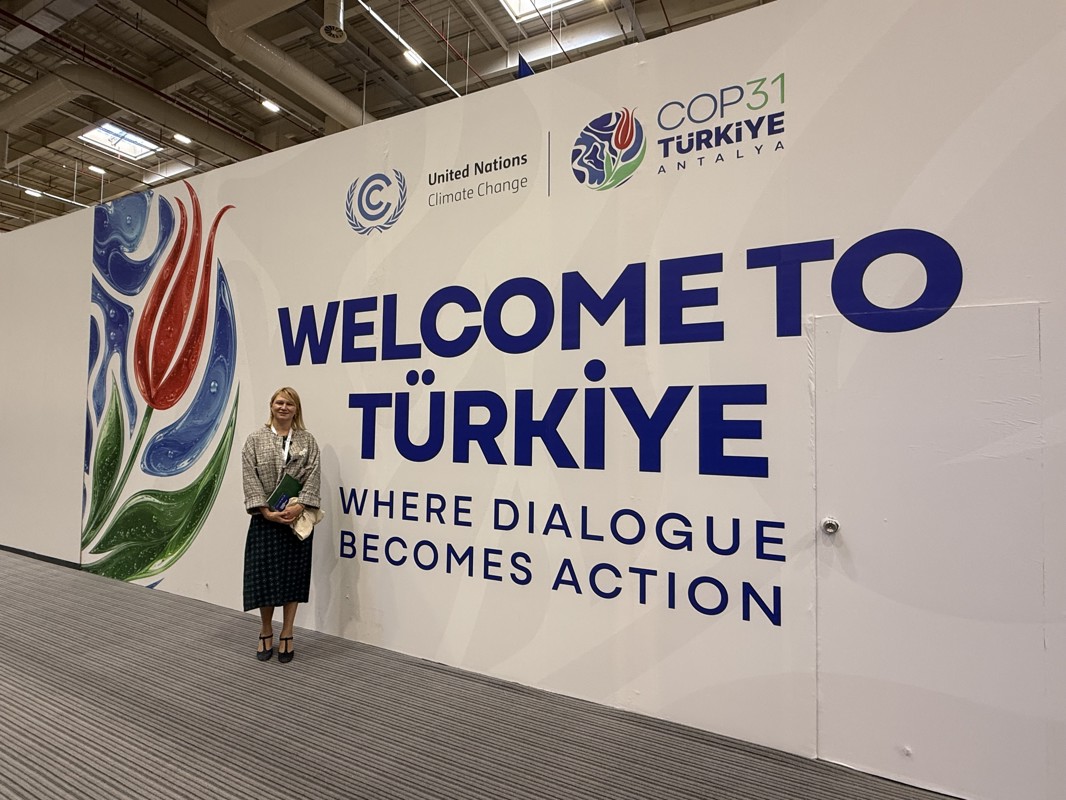
What role should universities play in addressing climate change? How can international academic cooperation translate into concrete action and measurable results? These issues were discussed by Dr hab. Marta Mendel, Vice-Rector for Internationalization at the Warsaw University of Life Sciences, during the COP31 | Ankara University Joint Rectors’ Forum.
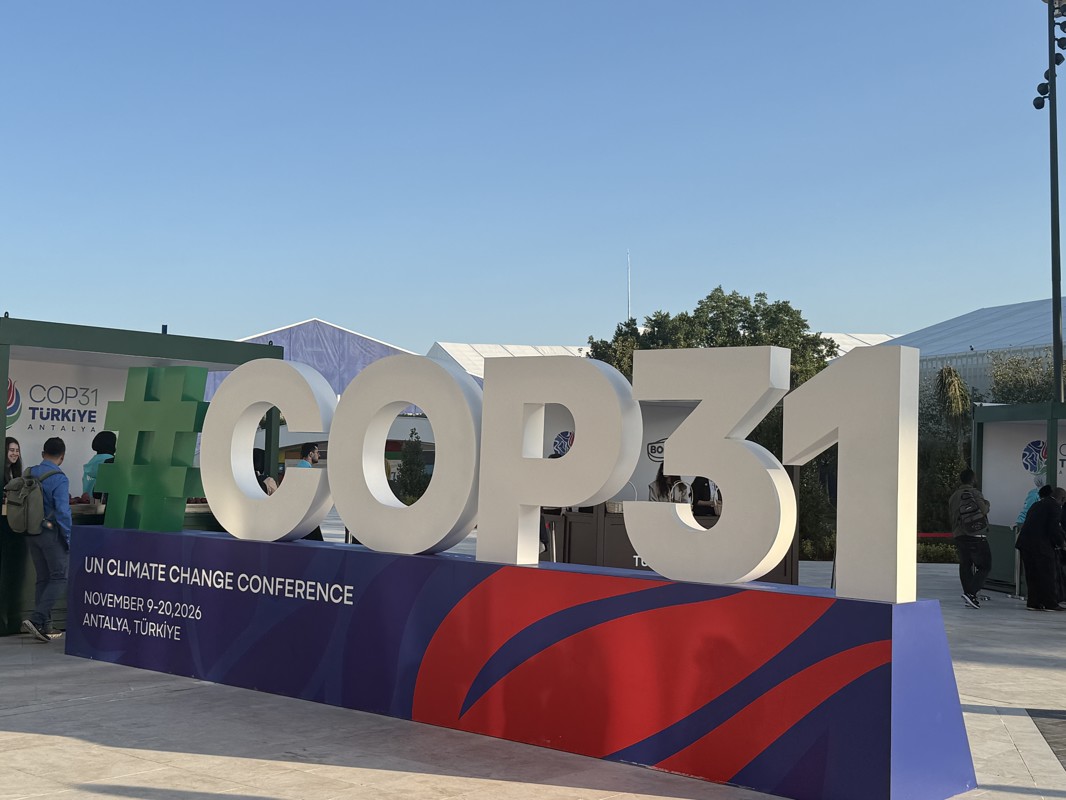
COP31 – the UN Climate Change Conference
COP31 (the 31st Conference of the Parties) is the annual United Nations Climate Change Conference, held under the United Nations Framework Convention on Climate Change (UNFCCC). In 2026, it takes place from 9 to 20 November in Antalya, Türkiye. The conference brings together representatives of governments, international organisations, academia, business and civil society to discuss reducing greenhouse gas emissions, adapting to climate change and financing climate action.
For SGGW, participation in the COP31 debate provides an opportunity to present the University’s research achievements, develop international cooperation and seek solutions in areas closely related to its academic profile, including agriculture, food security, biodiversity conservation, water management and forestry. It is also an opportunity to highlight the role of life sciences universities in connecting scientific research with practical applications and educating specialists capable of addressing the challenges of climate change.
COP31 | Ankara University Joint Rectors’ Forum
Dr hab. Marta Mendel participated in a panel discussion entitled “Integrating Climate Policies into Higher Education and Shaping the Future of Education”. In her contribution, she highlighted the responsibility of universities for shaping responses to global climate challenges. Universities can serve as a bridge between global scientific knowledge and action taken at the local level.
“Universities should not merely observe the global climate transition; they should actively help shape it. We need to rethink international cooperation, moving beyond knowledge exchange towards shared responsibility, institutional learning and the implementation of solutions that deliver measurable results. The success of our partnerships should not be judged by the number of projects completed or good practices presented, but by the tangible changes they bring about within universities and their wider communities,” emphasised Dr hab. Marta Mendel, rof. at SGGW.
International cooperation for climate action
One of the main themes of her contribution was the need to rethink the model of international academic cooperation. University partnerships should go beyond student and staff exchanges and the sharing of experience. Their purpose should be to develop joint solutions, strengthen institutional capacity and undertake activities whose outcomes can be assessed.
For SGGW, cooperation within international academic networks such as the European Bioeconomy University (EBU), the Euroleague for Life Sciences (ELLS) and the Association for European Life Science Universities (ICA) is particularly important.
These partnerships enable universities to learn from institutions operating in different geographical, economic and social contexts. The exchange of good practices can cover areas such as integrating climate issues into curricula, sustainable campus management, stakeholder engagement and the development of climate-resilient agricultural practices.
As a life sciences university, SGGW conducts research into the complex relationships between climate change, agriculture, food security, biodiversity, water management, human and animal health, and rural development.
The University’s experimental farms, forest research stations and other research facilities provide opportunities to test solutions under real-life conditions. International cooperation can further develop these activities through joint research and comparisons of results obtained under different climatic, environmental and socioeconomic conditions.
Climate education and engagement with socjety
Dr hab. Marta Mendel, prof. at SGGW, also emphasised the need to integrate climate-related issues into educational programmes across all academic disciplines. Climate literacy, systems thinking, interdisciplinary cooperation, adaptability and responsible leadership should be integral to preparing graduates for a world undergoing rapid change.
Universities’ engagement with society is equally important. For life sciences universities, this means working with farmers, food producers, businesses, public authorities and local communities. Such cooperation enables scientific knowledge to be translated into practical solutions that improve food security, protect natural resources, support the development of the bioeconomy and strengthen the resilience of local communities.
From commitments to measurable results
Assessing the effectiveness of international cooperation requires looking beyond traditional indicators such as greenhouse gas emissions, energy efficiency and resource consumption. It is equally important to monitor changes in university strategies and policies, the transformation of educational programmes, the development of student competencies and the implementation of good practices by partner institutions.
One proposal presented during the forum was the establishment of the International University Climate Learning and Action Network – an international network of universities dedicated to exchanging experience and jointly implementing climate solutions.
As part of this initiative, universities could assess their needs and capabilities, identify proven practices and select solutions developed by partner institutions, adapting them to their own circumstances and testing their implementation. Cooperation could also include study visits, staff exchanges, institutional mentoring, workshops and joint research initiatives.
In this context, Dr hab. Marta Mendel highlighted the opportunity to build on the annual ELLS conference, which will be hosted by SGGW in September 2027. Particular attention will be given to the experimental stations of life sciences universities. The event could provide a platform for presenting research infrastructure, exchanging institutional experience and developing joint initiatives addressing climate challenges.
Science and policy in response to global challenges
SGGW’s participation in COP31 highlights the importance of the academic community’s presence in the international climate debate. Science provides the knowledge and evidence needed to inform political, economic and social decisions. Universities, in turn, can translate research findings into practical solutions, shape social attitudes and prepare future generations to respond responsibly to the challenges of climate change.
As Dr hab. Marta Mendel emphasised, international cooperation should be based on light and flexible governance, strong commitment from all partners, transparent reporting and shared accountability for results.
Climate change knows no borders. Neither should academic cooperation, international ambitions or universities’ commitment to addressing its consequences.