

Scientists from Warsaw University of Life Sciences (SGGW) took part in an international expert meeting devoted to Europe’s food sovereignty, with a particular focus on protein diversification for sustainable food systems and farmers.
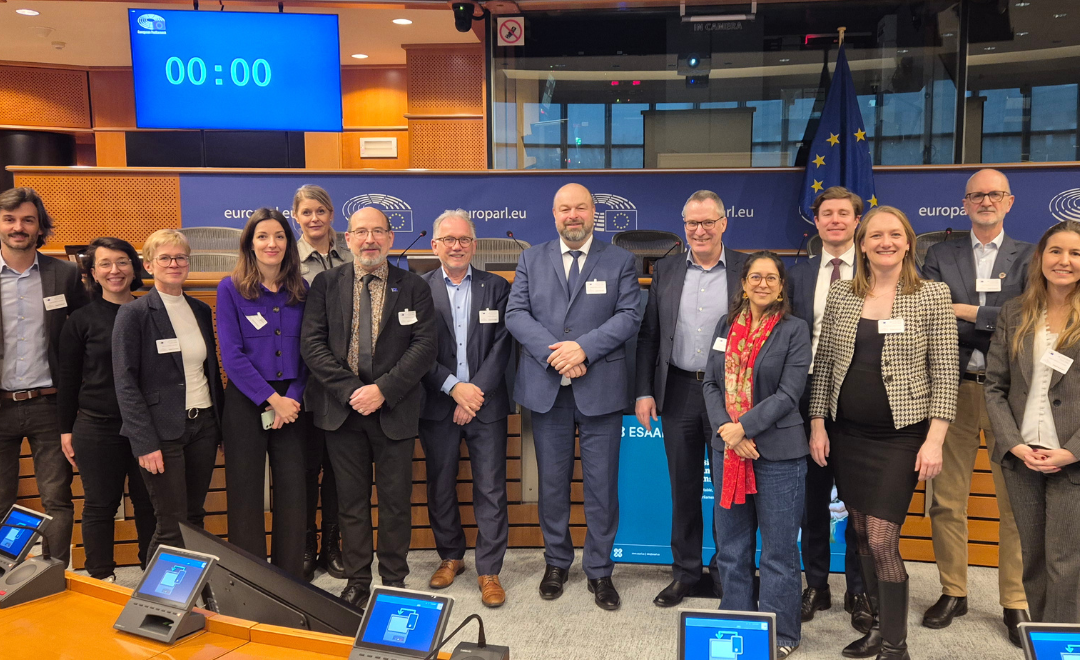
On 13 February 2026, a meeting organised by the European Science Alliance for Agriculture and Food (ESAAF) was held at the European Parliament in Brussels under the theme “Diversifying Proteins for Sustainable Food Systems and Farmers.”
Warsaw University of Life Sciences (SGGW), together with five other leading European agricultural institutions, is one of the founding members of ESAAF. The alliance was created to harness shared expertise – including many years of practical experience in agriculture and nutrition – held by SGGW and its partner institutions in order to support the development of sustainable, competitive, and resilient food systems. The meeting formed part of a broader debate on implementing the recommendations of the Strategic Dialogue on the Future of EU Agriculture, as well as the forthcoming European Action Plan for Plant-based Foods and the Protein Strategy.
Participants included representatives of the European Commission, Members of the European Parliament, officials from the Directorate-General for Health and Food Safety (DG SANTE), the Directorate-General for Agriculture and Rural Development (DG AGRI), and the European Board on Agriculture and Food (EBAF). SGGW was represented by Prof. Michał Zasada, Rector of SGGW, and Assoc. Prof. Dominika Średnicka-Tober, Department of Functional and Organic Food, Institute of Human Nutrition Sciences. Prof. Dominika Średnicka-Tober delivered a presentation titled “Governance and behaviour including dietary transition,” addressing governance of the food system transition, consumer behaviour, and the challenges related to changing dietary patterns.
The SGGW expert emphasised that protein diversification is not only a technological challenge but, above all, a matter of effective governance and coordination of public policies. Creating stable market conditions for farmers, reducing transition risks, and developing processing and logistics infrastructure are crucial. Attention was also drawn to the social and cultural barriers to dietary change, as well as the need for educational and systemic measures to help consumers choose more sustainable products.
Policymakers attending the event thanked the speakers for their contributions and expressed their willingness to take the organisation’s voice into account in the work of EBAF experts, the advisory body supporting the European Commission in shaping the vision and objectives of EU agricultural and food policy.
The participation of SGGW representatives in this debate highlights the university’s growing role in shaping European food policies grounded in sound scientific evidence and an interdisciplinary approach.