


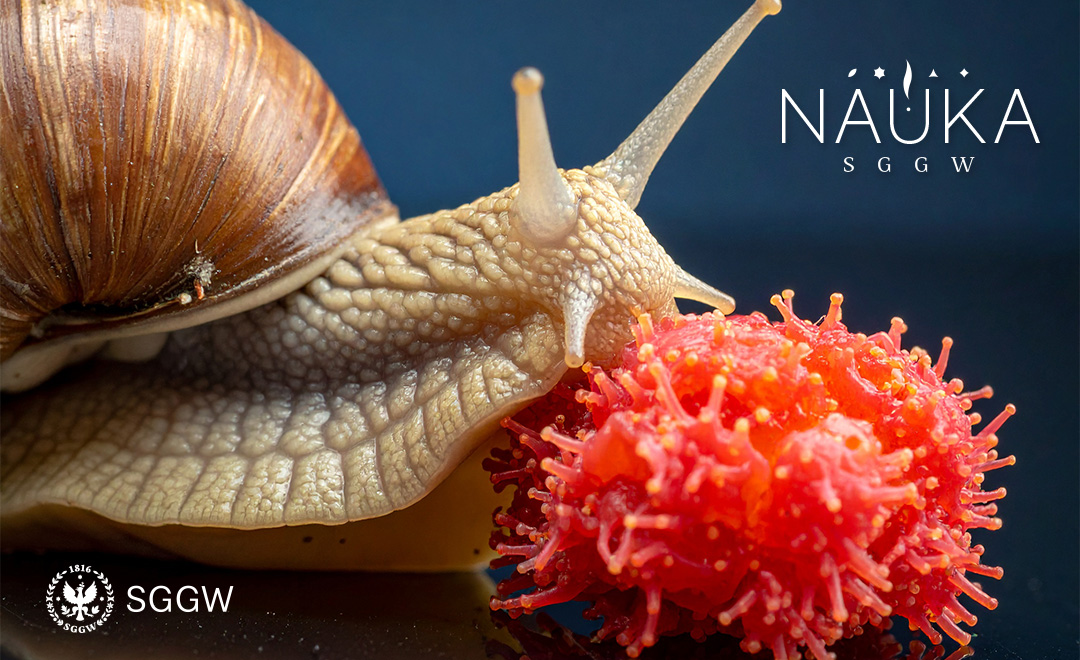
It turns out that snails may help in the difficult fight against colorectal cancer. Dr. Magdalena Matusiewicz from the Department of Nanobiotechnology at the Institute of Biology, Warsaw University of Life Sciences (SGGW), spoke about their use in therapy and the patented solution.
Snails in Colorectal Cancer Therapy
The patent claims cover methods for obtaining compositions and aqueous extracts from freeze-dried eggs of Helix aspersa aspersa
and Helix aspersa maxima, as well as their application in colorectal cancer therapy. The patent includes concentration ranges of aqueous extracts which, under in vitro conditions, demonstrated the ability to reduce the viability and number of Caco-2 colorectal cancer cells, decrease cell membrane integrity, and induce programmed cell death (apoptosis).
The claims also include the recommended daily intake of the preparations, determined based on a detailed analysis of mineral composition and vitamin D3 content in relation to daily reference intake values.
Research on Snails
The research used eggs, foot tissues, and isolated mucus from two subspecies of snails farmed in Poland: Helix aspersa aspersa and Helix aspersa maxima. Dr. Magdalena Matusiewicz began her first studies on the use of snails after completing her doctoral studies, and described them in a 2018 publication. The research focused on a detailed analysis of nutritional and bioactive compounds present in snail mucus, foot tissues, shells, and aqueous extracts obtained from these tissues. An important part of the study was also evaluating the impact of these extracts and their different molecular weight fractions to evaluate the impact of these extracts and their molecular-weight bility of Caco-2 colorectal cancer cells.
At the time, scientific knowledge regarding snail tissues was still very limited. Little was known about their nutritional value, the bioactive compounds they contain, or their effects on body cells, including cancer cells. This led to the decision to further develop this research area. Another motivation was the opportunity to expand research expertise in in vitro cell culture studies, an area in which Dr. Matusiewicz specializes within the Department of Nanobiotechnology. Previously, her research experience mainly focused on nutritional experiments conducted on animal models such as rats and mice.
Why Colorectal Cancer?
Colorectal cancer is the third most common cancer in terms of incidence and the second leading cause of cancer-related mortality. Particularly concerning is the growing number of cases among people under the age of 50. Diet is considered one of the key factors contributing to the development of this disease, suggesting that appropriate nutritional interventions may help reduce its occurrence.
Research conducted by Dr. Matusiewicz indicates that bioactive compounds present in the eggs, foot tissues, and mucus of Helix aspersa aspersa and Helix aspersa maxima may have beneficial effects on the initiation and progression of colorectal cancer. Due to their antioxidant properties, these compounds may help reduce the formation and activity of reactive oxygen species. In vitro studies using the Caco-2 cell line demonstrated that extracts and hydrolysates from the studied snail tissues reduced cell viability, disrupted cell membrane integrity, and induced apoptosis.
The observed effects may result from the presence of antioxidants, low-molecular-weight peptides with potentially selective activity against cancer cells, phenolic compounds, glutathione (GSH), lipid peroxidation products, compounds containing uronic acids, as well as allantoin and glycolic acid. It is also possible that other bioactive compounds and their additive or synergistic interactions contribute to the observed cytotoxic effect on cancer cells.
Additionally, it is suggested that consuming snail eggs, through their influence on proteins involved in both the intrinsic and extrinsic apoptosis pathways, may potentially increase the sensitivity of cancer cells to various therapeutic strategies used in colorectal cancer treatment. At the same time, the absence of toxic effects of the hydrolysates on healthy intestinal cells indicates the potential use of these snail tissues in cancer prevention.
Currently, there are no products on the market that directly correspond to the patented solutions. Such products could attract consumer interest as dietary supplements or novel food products.
Research Team
The research team primarily includes scientists from Warsaw University of Life Sciences (SGGW), including the Department of Nanobiotechnology at the Institute of Biology and the Department of Animal Breeding and Nutrition at the Institute of Animal Sciences, as well as graduate students from biotechnology, biomedical technology, and animal bioengineering programs.
Dr. Magdalena Matusiewicz
Department of Nanobiotechnology
Institute of Biology, Warsaw University of Life Sciences (SGGW)